
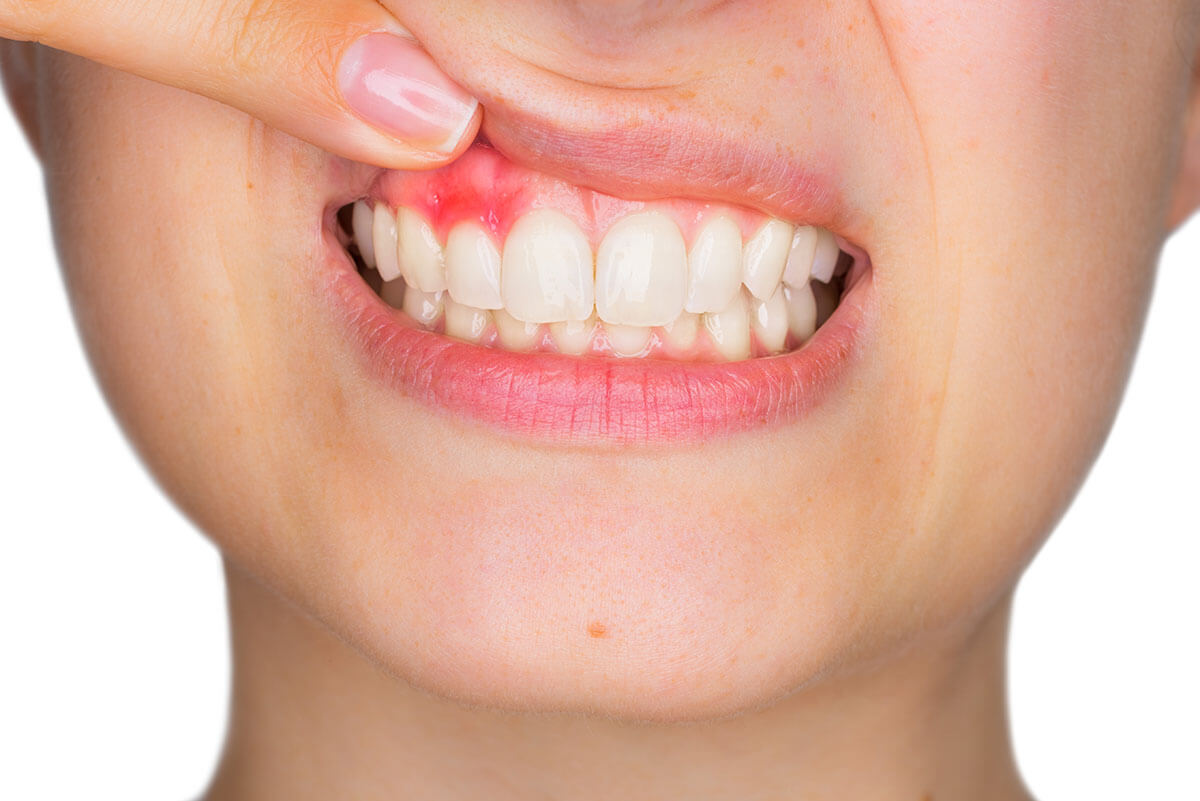
If your gums are inflamed, red, or sore, you’re not alone. Inflamed gums are often caused by plaque buildup, irritation, or early gum disease, but they can also be linked to dental appliances, hormonal changes, or underlying health conditions.
When should you see a dentist? Persistent swelling, bleeding, or pain should be evaluated by a dentist.
Most cases of inflamed gums can be treated and even reversed, especially when caught early. However, if your symptoms persist, worsen, or include swelling around one tooth, pus, or significant pain, it’s important to see a dentist.
Schedule an appointment with Columbia Smiles to get personalized care.
What do inflamed gums look and feel like?
Inflamed gums can look and feel very different from healthy gums. Understanding the difference can help you recognize when something isn’t right. Common signs of inflamed gums or irritated gums include:
- Red, swollen, puffy, or shiny gums
- Tender or sore gums
- Bleeding when brushing or flossing
- Bad breath or a bad taste in your mouth
- Pain when chewing
- Swelling around one tooth
- Gum recession (gums pulling away from teeth)
- Pus or bumps along the gumline (more urgent)
Healthy vs. Inflamed Gums
| Healthy Gums | Inflamed Gums |
|---|---|
| Pink or coral color | Red, dark red, or purple |
| Firm texture | Puffy, swollen, or shiny |
| Minimal bleeding | Bleeding with brushing or flossing |
| No ongoing pain | Tenderness, soreness, or irritation |
Common causes of inflamed gums
There are many possible causes of inflamed gums, ranging from mild irritation to more serious conditions.
Plaque and tartar buildup
One of the most common reasons for inflamed gums is plaque buildup along the gumline. When plaque hardens into tartar, it can’t be removed with brushing alone and may lead to gum inflammation and disease.
Gingivitis or early gum disease
Gingivitis is a common cause of red, inflamed gums. It can lead to swelling, tenderness, and bleeding, but it is often reversible with professional cleaning and improved oral hygiene.
Periodontitis or advanced gum disease
If gingivitis is left untreated, it can progress into periodontitis, a more serious form of gum disease. This may involve infected gums, gum recession, bone loss, or loose teeth.
Brushing or flossing too hard
Using a hard-bristled toothbrush or brushing too aggressively can cause irritated gums. Starting a new flossing routine may also cause temporary soreness and bleeding, but persistent soreness and bleeding should be evaluated.
Dental appliances, braces, crowns, or dentures
Ill-fitting dental work or appliances can trap plaque or rub against the gums, leading to inflammation. If you notice discomfort around restorations, your dentist can help adjust them.
Hormonal changes, pregnancy, or medical conditions
Hormonal changes (such as pregnancy), certain medications, diabetes, dry mouth, or vitamin deficiencies can all contribute to sore gums and gum inflammation.
Are inflamed gums the same as infected gums?
While inflamed gums are often irritated or swollen, infected gums may involve more serious symptoms.
Signs of possible infection include:
- Pus around the gums
- Severe or worsening pain
- Swelling around one tooth
- A pimple-like bump on the gums
- Bad taste in the mouth
Only a dentist can determine whether your symptoms are due to irritation, gum disease, or infection.
If you notice signs of infection, book an appointment as soon as possible.
How to treat inflamed gums
If you’re wondering how to treat or get rid of inflamed gums, it depends on how severe the inflammation is.
At-home care for mild gum irritation
For mild symptoms, these home remedies for inflamed gums may help soothe irritation:
- Brush twice daily with a soft-bristled toothbrush
- Floss gently once a day
- Rinse with warm salt water to soothe sore gums
- Stay hydrated
- Avoid tobacco products
- Replace old toothbrushes
- Avoid aggressive brushing
- Use a dentist-recommended mouthwash
These steps can support gum health, but they don’t replace professional care if symptoms persist.
Professional dental treatment for inflamed gums
If symptoms continue, professional care is important. Inflamed gums treatment may include:
- A comprehensive dental exam
- Professional teeth cleaning
- Deep cleaning (tooth scaling and root planing)
- Treatment for infection or abscess
- Adjustments to dental restorations or appliances
- Ongoing gum care for periodontal disease
For more advanced cases, periodontal treatment may be recommended to restore gum health. At Columbia Smiles, Dr. Michael Hsu and the dental team focus on identifying the root cause of inflamed gums and providing treatment that supports long-term oral health.
When should you see a dentist for inflamed gums?
If you’re unsure what to do for inflamed gums, it’s best to monitor your symptoms closely and seek care when needed. You should see a dentist if you experience:
- Gum swelling lasting more than 1–2 weeks
- Persistent bleeding when brushing or flossing
- Painful or worsening symptoms
- Swelling around one tooth
- Pus, bumps, or bad taste
- Gum recession
- Loose teeth
- Chronic bad breath
- Pain when chewing
If your gums are swollen, sore, or bleeding, Columbia Smiles can help identify the cause and recommend the right next step. You can schedule an appointment today at our Columbia, MD office.
How to prevent inflamed gums
Preventing gum inflammation starts with consistent oral care and regular dental visits.
To maintain healthy gums:
- Brush twice daily
- Floss every day
- Keep routine dental cleanings
- Avoid tobacco use
- Eat a balanced diet
- Address dry mouth or irritation early
- Discuss recurring gum symptoms with a dentist
- Don’t ignore bleeding gums
Regular visits for preventive dentistry can help catch problems early and keep your gums healthy.
FAQs about inflamed gums
Mild gum irritation may improve with better oral hygiene. However, persistent inflammation often requires professional treatment to fully resolve.
Gentle brushing, flossing, and warm saltwater rinses can help soothe sore gums. However, these are temporary measures if the underlying issue isn’t addressed.
They can be. Inflamed gums are often an early sign of gingivitis (gum disease), which can progress if not treated.
This may indicate localized irritation, trapped food, or infection. It’s best to have it evaluated by a dentist if it lasts after brushing and flossing.
Inflamed gums are typically red, swollen, tender, and may bleed easily compared to healthy, firm, pink gums.
Some antimicrobial mouthwashes may help reduce bacteria, but they should be used alongside proper brushing and flossing, not as a replacement.
If symptoms last longer than a week or two, worsen, or include pain, swelling, or bleeding, you should schedule a dental visit.
Schedule a gum health evaluation at Columbia Smiles
If you’re experiencing inflamed gums, sore gums, or bleeding, early care can make a big difference and help prevent more serious dental problems.
Schedule an appointment with Columbia Smiles in Columbia, MD, to get expert care and protect your long-term gum health.